
MOZA SR-P Pedal : Test & Review | What it's really worth in 2026
MOZA SR-P Pedal: My quick review
This pedalboard brings a real leap forward in braking control: you brake later, harder and, above all, more regularly, which clearly changes the way you drive. It makes sense for motivated PC simracers who already have some equipment (cockpit or rigid support), and who want to go one step further without aiming for the very top of the range. The piloting gain/price ratio is coherent.
When you buy through our links, we may earn an affiliate commission.
In the world of "budget" cranksets for sim racing, the MOZA SR-P has quickly established itself as a highly visible option. This is clearly a crankset designed to accompany entry-level and mid-range bases, with a simple objective: to switch to load-cell braking without blowing the budget. It's aimed at simracers who want to take a real step forward in precision, without yet plunging into high-end all-metal cranksets at stratospheric prices.
On paper, the SR-P promises more consistent braking, a more realistic feel than simple position sensors, and enough adjustability to suit both the serious casual gamer and the virtual driver who logs hours upon hours in the league. My angle here is simple: does it really deliver better control of the car, braking later and more consistently, while remaining enjoyable and modular enough for a home setup or a more serious cockpit?
Another key point: MOZA is pushing ahead with its complete ecosystem (steering wheels, bases, cranksets, software). The SR-P is the brand's "serious" pedal entry point. It must therefore be credible enough for intensive use, while remaining accessible in terms of assembly, settings and compatibility. That's exactly what I set out to assess: feel underfoot, overall consistency and real value in a modern setup.
Design and manufacturing
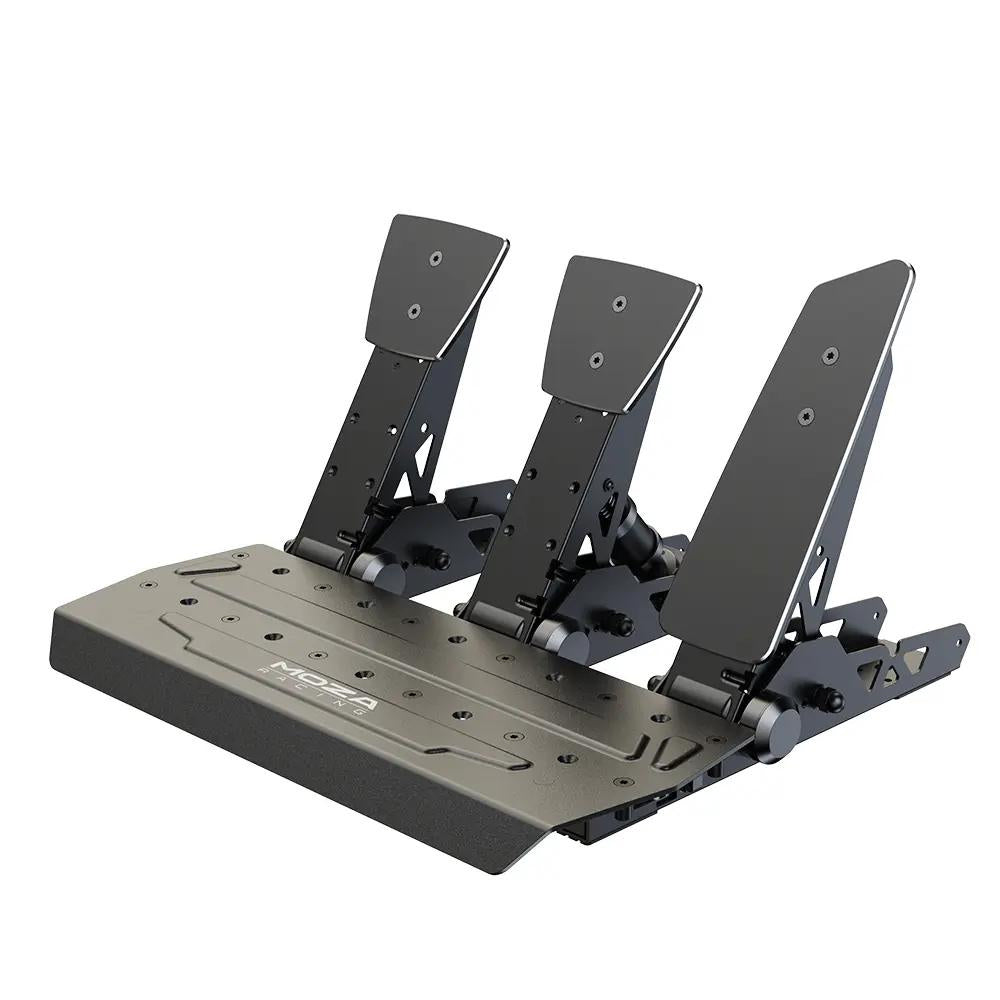
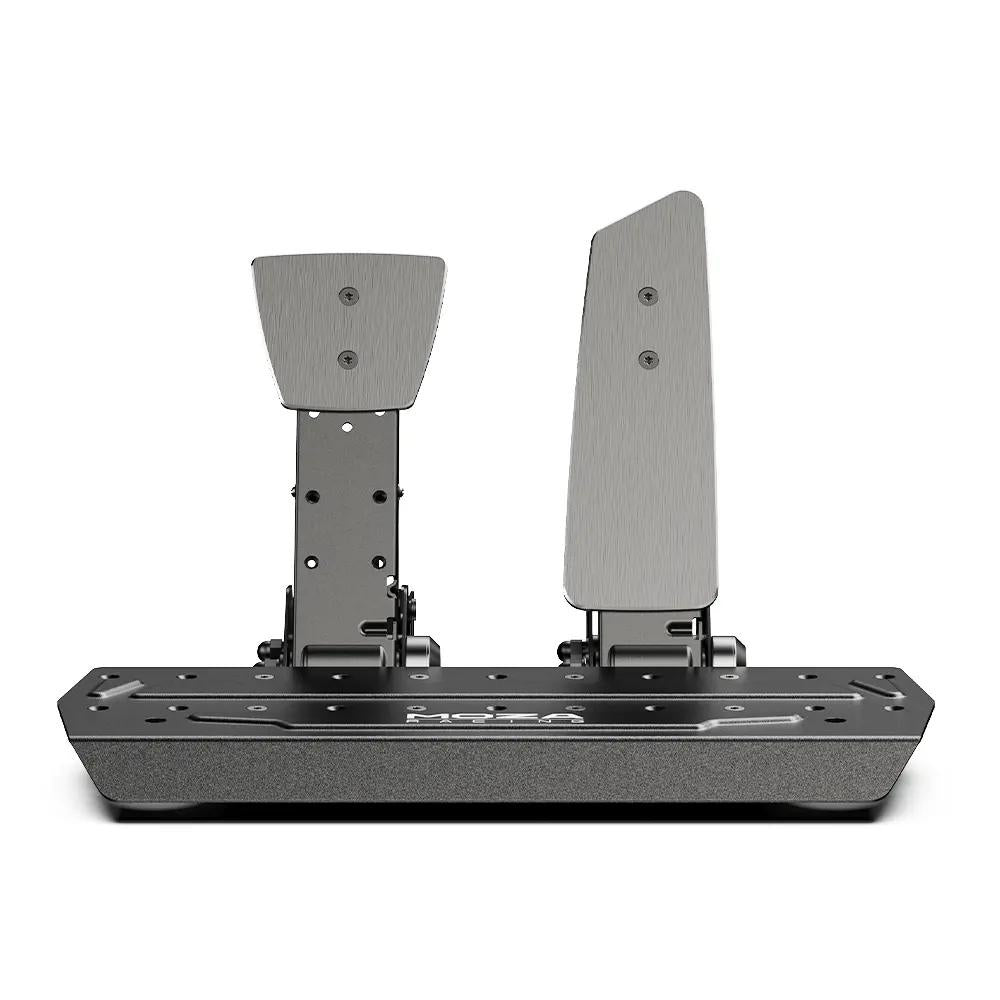
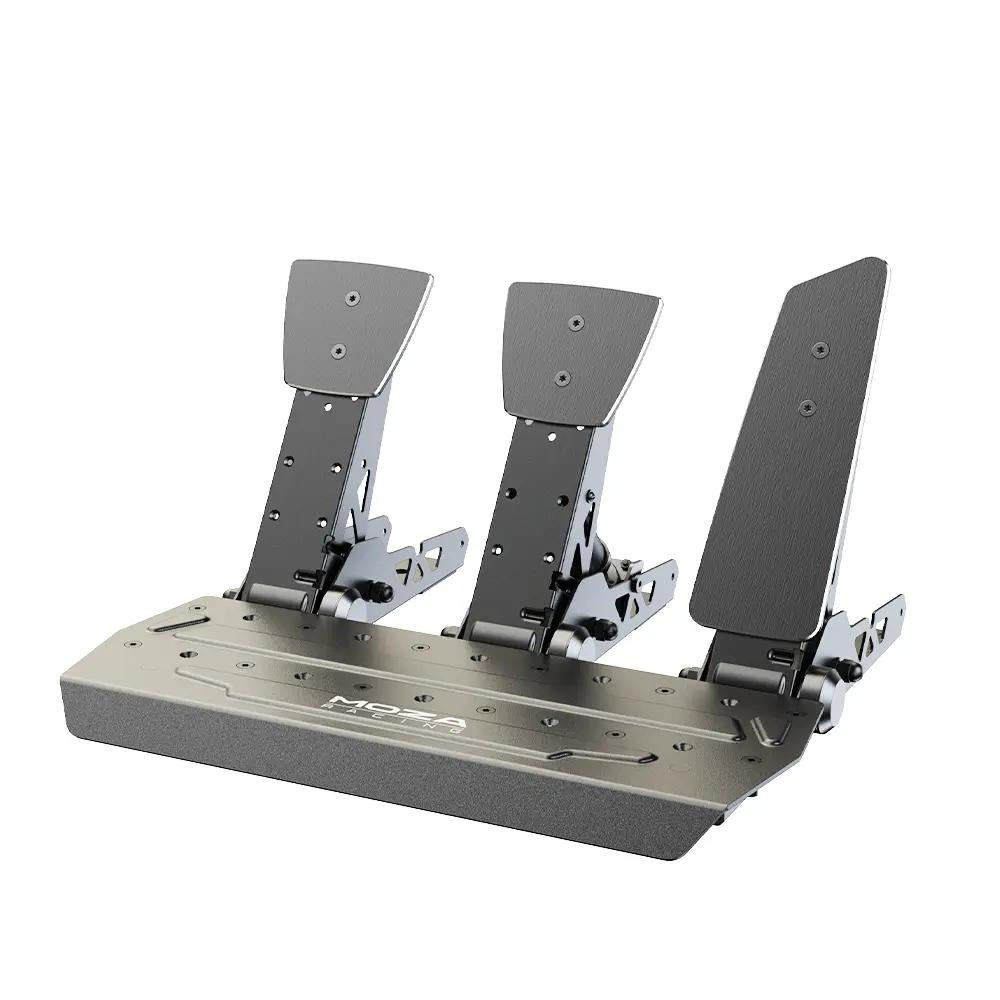
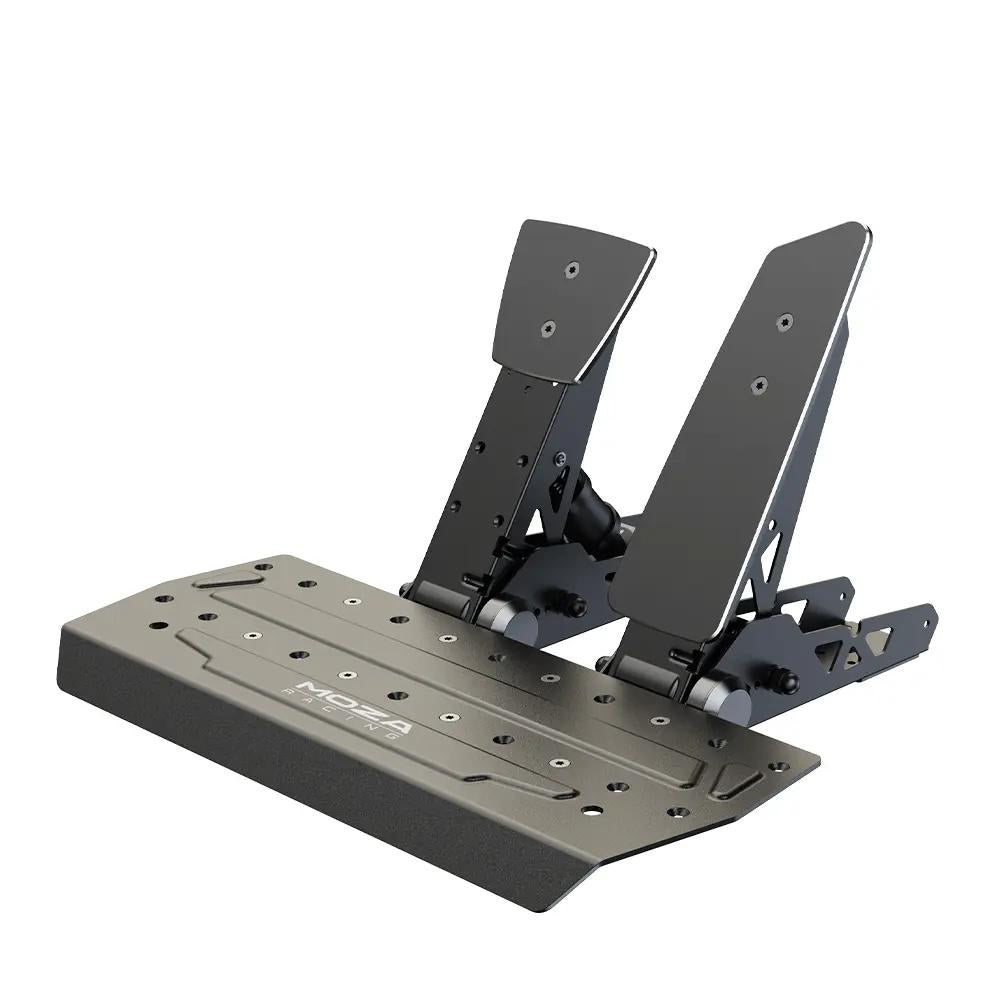
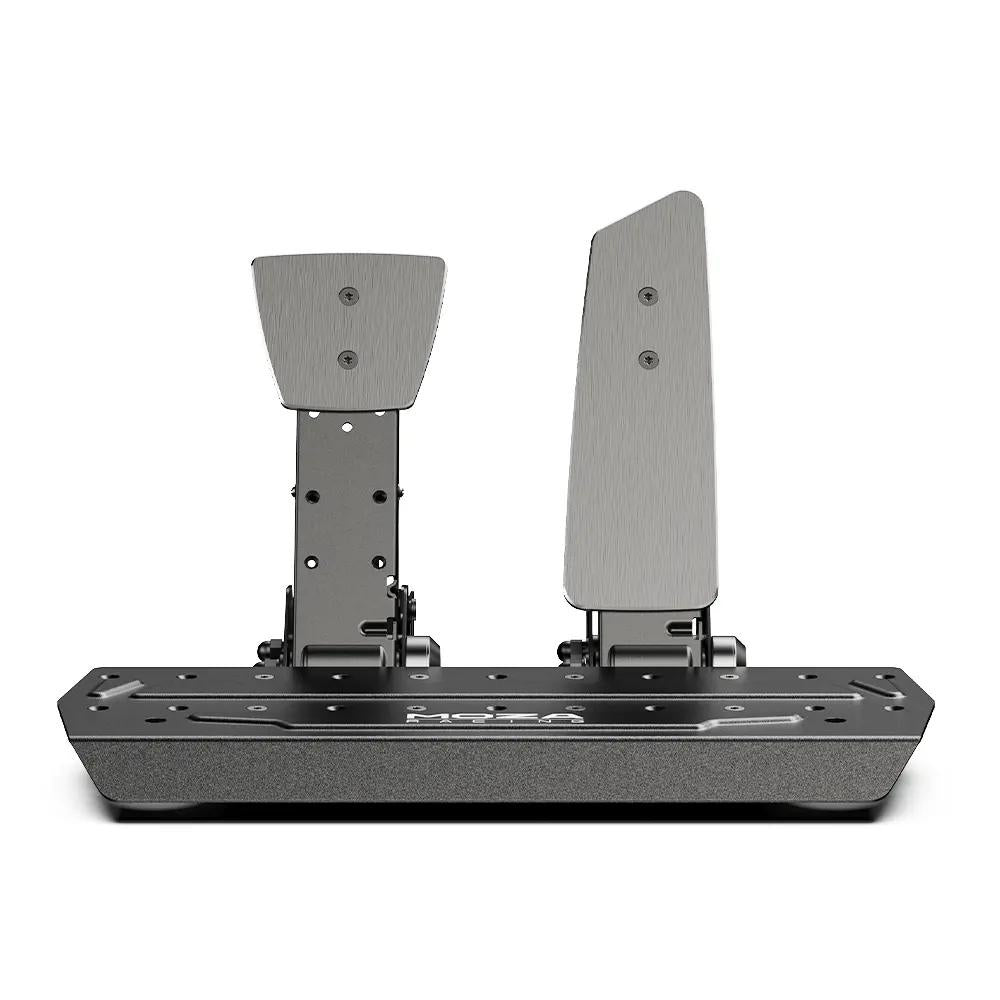
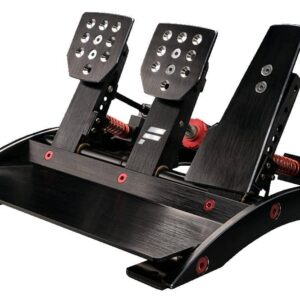
The MOZA SR-P is immediately serious. The whole thing is made of metal, with a rather thick, cut-and-bent sheet-steel construction that gives the right impression of rigidity for the range. The base is wide, the pedals are mounted on a "plate" type structure with reinforcements, and it feels like it's designed to be bolted to a cockpit or at least placed on a non-slip plate. In hand, the parts inspire more confidence than most entry-level plastic cranksets.
The pedals themselves have a rather industrial design. It's not high-end machined billet aluminum, but the finish is clean, consistent and free from annoying burrs. The surfaces are lightly textured, the paint seems resistant, and the whole thing doesn't have that "toy" feel you find on some less expensive competing sets. When pressed firmly, they don't bend in all directions. There's a sense of density, a minimum of mechanical seriousness.
What's surprising is the overall feeling of robustness for the price we're aiming for. There's no fear of slamming on the brakes with hard braking. The crankset doesn't feel like it's going to bend under the first hard braking. At this price level, that's a real plus. Long-term durability remains to be seen, but the choice of materials and the type of assembly inspire more confidence than all-plastic solutions.
What's a little disappointing is the slightly "metal plate", very angular appearance, less premium than cast or machined aluminum pedalboards found in the mid/high range. The feeling of "luxury" and refinement is clearly inferior to that of more expensive pedals, both in terms of fine mechanical adjustments and visual appearance. The basic feel of travel and progressiveness may also seem a little rough compared to higher-end models, but we're in another price category, which puts things into perspective.
Settings, customization and compatibility
The MOZA SR-P is positioned as an affordable crankset worthy of a simracer who really wants to fine-tune its feel. Mechanical adjustments remain basic but useful: pedal position, angle, and hardness via springs and elastomers (depending on version and mounting). We're not talking about the ultra-customization of a competition crankset, but there's enough to adapt ergonomics to a GT cockpit or a slightly more F1 position, and above all to adjust brake hardness.
On the software side, it's all in the MOZA Pit House software. The interface is pretty straightforward, allowing you to calibrate the three pedals, adjust response curves and dead zones. This is where the SR-P really comes into its own. You can, for example, make the throttle more progressive in the first part of the stroke for better metering on exit, or virtually harden the start of braking. The learning curve is reasonable: you'll get the hang of it pretty quickly, even if you're not an expert, as long as you take the time to test and fine-tune.
Compatibility is essentially PC-oriented, with seamless integration into the MOZA ecosystem. Plugged into a PC, the pedalboard is recognized without difficulty, and popular simulation games detect it correctly. On a console, the situation depends very much on the rest of the hardware: used alone in direct USB, it can be limited or complicated, and you'll often have to go through the compatible MOZA base or another intermediary. The SR-P is really designed as a PC setup brick first and foremost.
In terms of ecosystem, it integrates well with MOZA bases and steering wheels, but it can also be adapted in a mixed setup with other brands, as long as the PC recognizes the peripheral and the cockpit offers suitable drillings or a universal plate. As an entry point, it's coherent: you can start with it in a mid-range setup and keep it for a long time, even if you upgrade the base and steering wheel. This is not a purely temporary or disposable product.
Sensations in play
The heart of the matter with the MOZA SR-P is obviously how it feels on the track, especially when it comes to braking. Switching to a load cell clearly changes the way you ride compared to a simple position sensor crankset. Here, braking really depends on the force applied to the pedal, not on the distance covered. The immediate result: braking points become more repeatable, corner entry metering is more precise, and wheel lock-ups are easier to anticipate.
On the racetrack, where the pedals really come into their own is in the phases of hard braking and gradual release. You can plant the car in a straight line, then release the pressure according to what you feel in the steering wheel and what you see on the screen, without that impression of a "blurred dead zone" in the middle of the race. You start to really "play" with foot pressure rather than ankle position. You suddenly understand where you are in the braking range.
Grip readings benefit greatly from this approach. When the tires start to saturate, it's easier to feel when it's time to ease off a little. Combined with a correct steering wheel, you can better read the limit. The crankset itself obviously doesn't generate force feedback, but its linearity and the ratio between force applied and braking power make these phases much more natural. There's less of an "all or nothing" sensation than on some entry-level cranksets.
On vibrators, the impact is indirect but real. Well-judged braking allows you to enter the aggressive strings more cleanly, without bouncing the car too much. You can afford to brake a little later, but still keep some modulation margin at the end. This is where the SR-P gives you the sensation of saving time per lap. You're more daring, because you've got the pedal to catch up if the car starts to destabilize.
In rapid corrections, the main benefit is seen in the resumption of acceleration. The SR-P's throttle is reasonably progressive, but not perfect either. You can fine-tune the throttle return on corner exit, especially after adjusting the curve in the software. It doesn't transform the ride like the brake, but you can feel a gain in finesse compared to a very basic crankset. Corrections on wet tracks or with powerful rear-wheel drive become more manageable.
Over long sessions, consistency is generally good. The brake doesn't change its behavior, the force required remains consistent, and fatigue comes mainly from the rider, not the equipment. If you set the brake very hard, the leg may get tired, but that's the principle of the load cell brake: you work more with the quadriceps. A slightly more moderate setting strikes a good balance between realism and comfort. The mechanical stability of the crankset also contributes to this consistency, as long as it's securely fastened.
Compared to an entry-level crankset without load cell, it's night and day on the brake. You brake later, more precisely, and gain a lot of confidence. Compared to a higher-end crankset, the SR-P feels a little less refined in terms of pure feel: the transition between the different braking phases is a little less "buttery", less progressive, and the mechanics sometimes lack that micro-detail found on premium sets. But for its segment, the qualitative leap remains clear. Compared to the basic pedals that come with a lot of steering wheels, we're in another world.
As far as overall immersion is concerned, the pedals do their job: you feel like you're driving with your feet, not just "playing" by pressing buttons. You know what you're doing to the car. And that, for a simracer who wants to progress, is probably the strongest argument.
Who's it for? Strengths and limitations
The MOZA SR-P is clearly aimed at PC simracers who already have a minimum of motivation to progress and who want to invest in a more serious crankset, without necessarily switching immediately to the very top of the range. It's well suited to the "intermediate" profile: those who already have a cockpit or rigid stand, a few hundred hours of riding experience, and who feel that their original crankset is holding them back, both literally and figuratively. For ambitious beginners, it's also a good base, provided you accept a little time to adapt to force brakes.
What I particularly like is the balance between price, construction and riding performance. The brake load cell really changes the way you ride. The overall rigidity is sufficient to brake hard without shaking, and the software settings make it possible to adapt to different riding styles and cars. Integrated into a MOZA ecosystem, the SR-P makes even more sense, with centralized calibration and a fairly consistent experience. You get the feeling that the pedalboard has been designed to be used seriously, not as a mere accessory.
But there are limits. First of all, this isn't a "plug and forget" pedalboard for living rooms on carpet: it needs to be properly fixed to reveal its full potential. Without a cockpit or rigid support, the experience quickly deteriorates. Then, compared with higher-end cranksets, the pure feel underfoot remains a little less refined, especially when it comes to progressive braking. You can guess the design concessions made to keep the price down. Finally, console compatibility is limited and dependent on the rest of the setup, which reduces its interest for strictly console gamers.
In terms of investment, the SR-P is a cost-effective "game changer" for those coming from a classic crankset. The perceived value is good: you pay for a real gain in performance and consistency, not for superfluous design. For a simulation-oriented PC setup, it's an investment that makes much more sense than simply changing the steering wheel and keeping basic pedals.
Verdict
The MOZA SR-P occupies a strategic place in a modern simracing setup: it's often the first real load-cell crankset you'll buy, the one that shifts braking into a more serious approach. In concrete terms, what it changes is the ability to brake later, harder and, above all, repeatedly. You gain in confidence, consistency and understanding of the car's behavior. For a mid-range car, the impact on lap times and driving pleasure is very tangible.
On the market, it's clearly positioned as an accessible mid-range pedalboard, above the "bundle" sets supplied with lots of wheels, but below the premium monsters in solid aluminum. It's an ideal pivot for building a performance-oriented PC setup, especially if you're considering or already own a MOZA base. For the occasional console gamer, or someone who can't securely mount their pedalboard, other simpler options may sometimes be more suitable.
If you're looking for a solid, precise crankset with a real load-cell brake to take your riding to the next level without blowing your budget, the MOZA SR-P can clearly make the difference in your setup.




Reviews