
Simlab XP1 Loadcell Pedals : Test & Review | What it's really worth in 2026
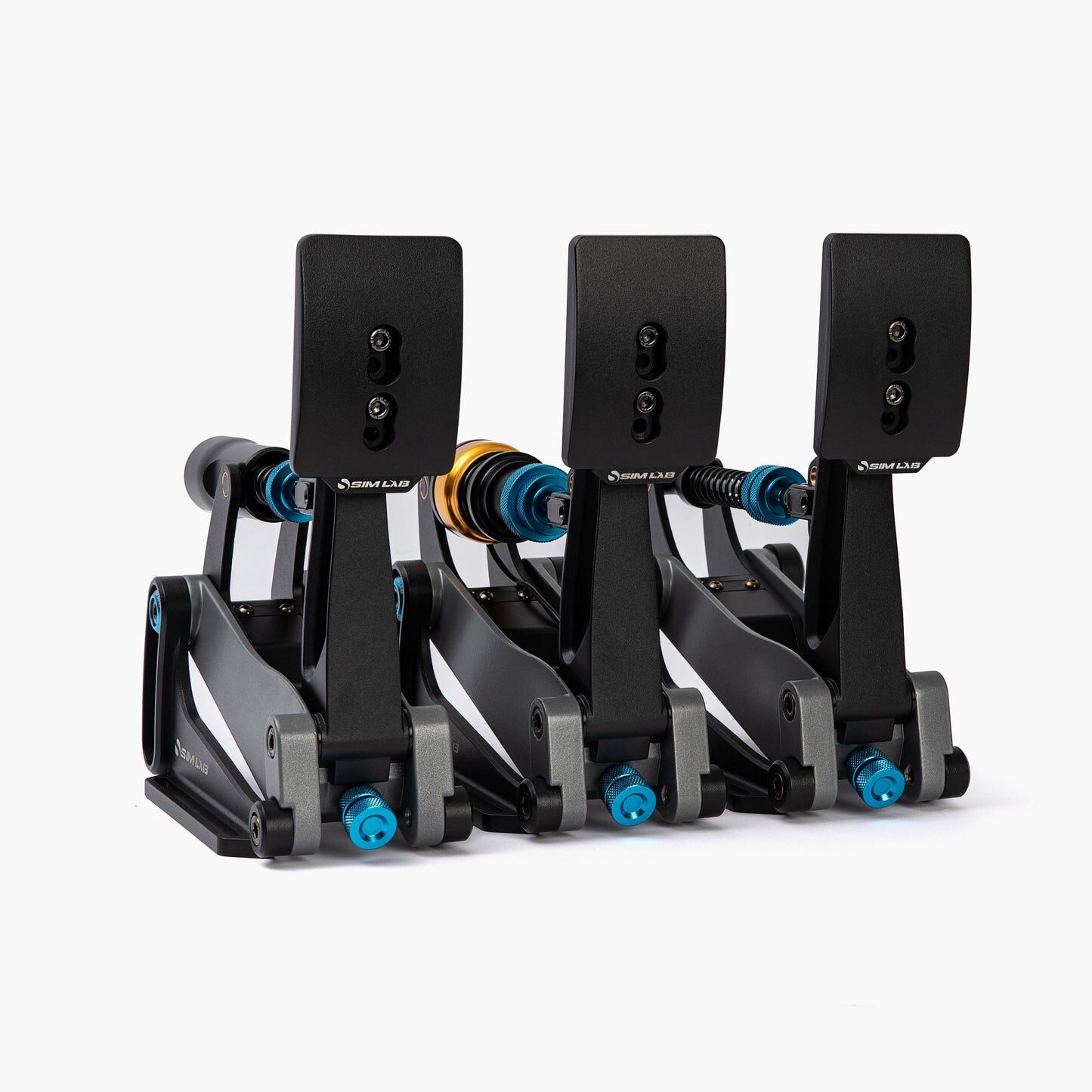
Simlab XP1 Loadcell Pedals: My quick review
This crankset gave me a real feeling of a work tool: braking becomes more legible, more repeatable, and it clearly changes consistency over several laps. It makes sense for PC sim racers already equipped with a rigid cockpit, who ride often and want to take their braking to the next level. The investment seems coherent if the objective is long-term progression.
When you buy through our links, we may earn an affiliate commission.
In the small world of high-end loadcell pedalboards, the Simlab XP1 is clearly one of the models that catches the eye of demanding sim racers. This is a 3-pedal loadcell pedalboard, designed for the PC, aimed directly at those who want ultra-consistent braking, advanced settings and a "pro" feel underfoot. Sim-Lab already has a strong reputation for aluminum cockpits, and with the XP1 we can feel that they want to impose the same level on the pedals.
On paper, the XP1 promises a highly progressive brake, all-metal hardware, great rigidity and almost total customization of stroke and hardness. The idea is simple: to offer enough finesse for advanced riders, without becoming an incomprehensible gas factory. The angle I chose for this test revolves around three points: brake consistency over long stints, precision in critical phases (trail braking, modulations on exit) and everyday comfort. In short, does this crankset really do better than a good mid-range loadcell, and does it justify its place in an advanced setup?
Design and manufacturing
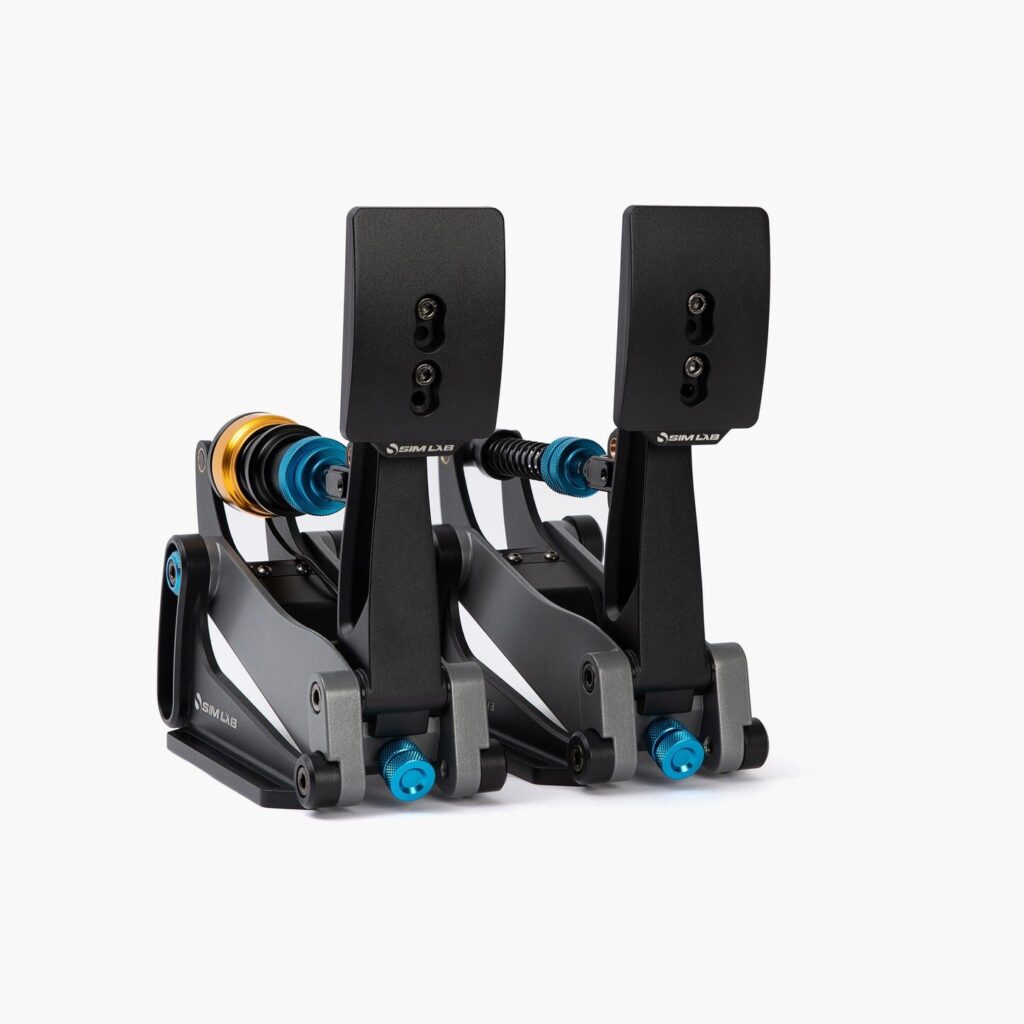
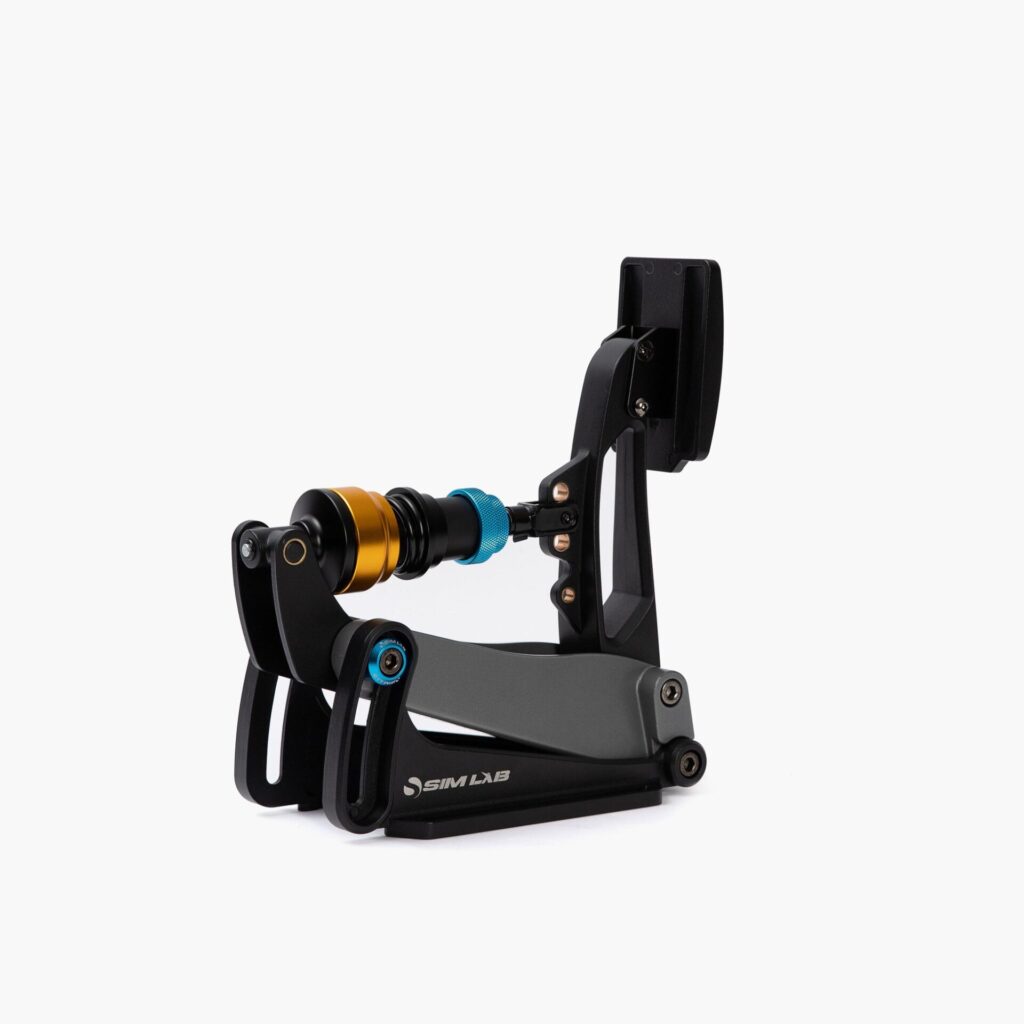
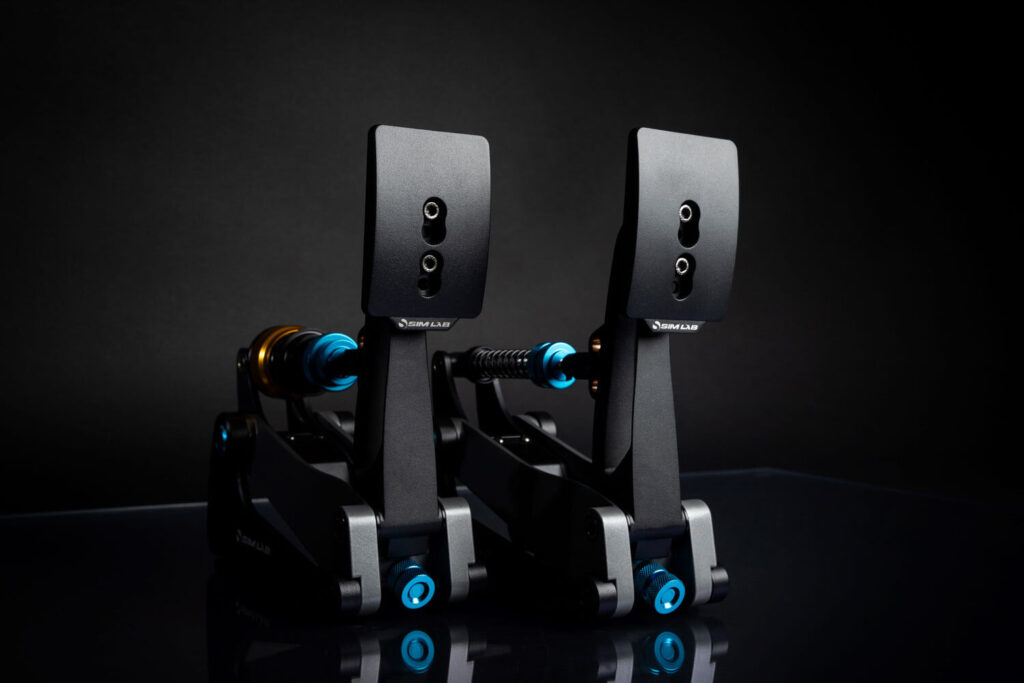
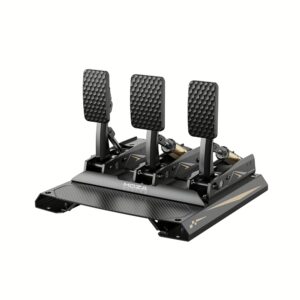
Visually and in hand, the Simlab XP1 exudes seriousness. The entire structure is made of metal, with extensive use of machined aluminum and thick plates. Nothing flexes, nothing cracks. You really get the impression of a compact, dense block, built to withstand years of hard braking without flinching. The look is typically "industrial sim racing": raw, precise, with no decorative fuss. It inspires confidence rather than spectacle, and that's exactly what you'd expect from a crankset in this range.
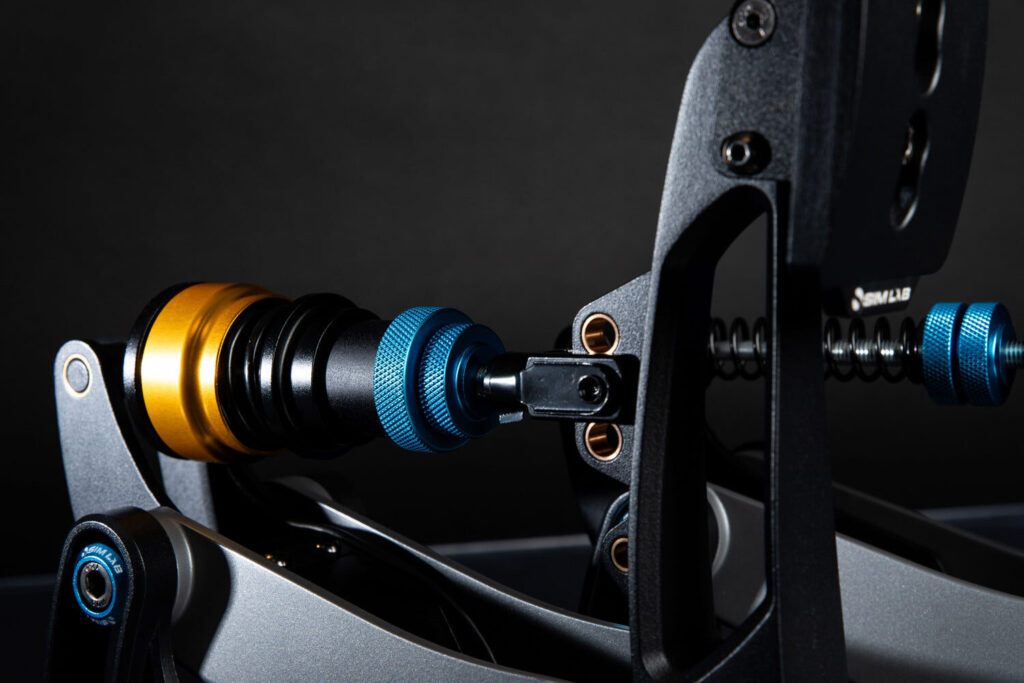
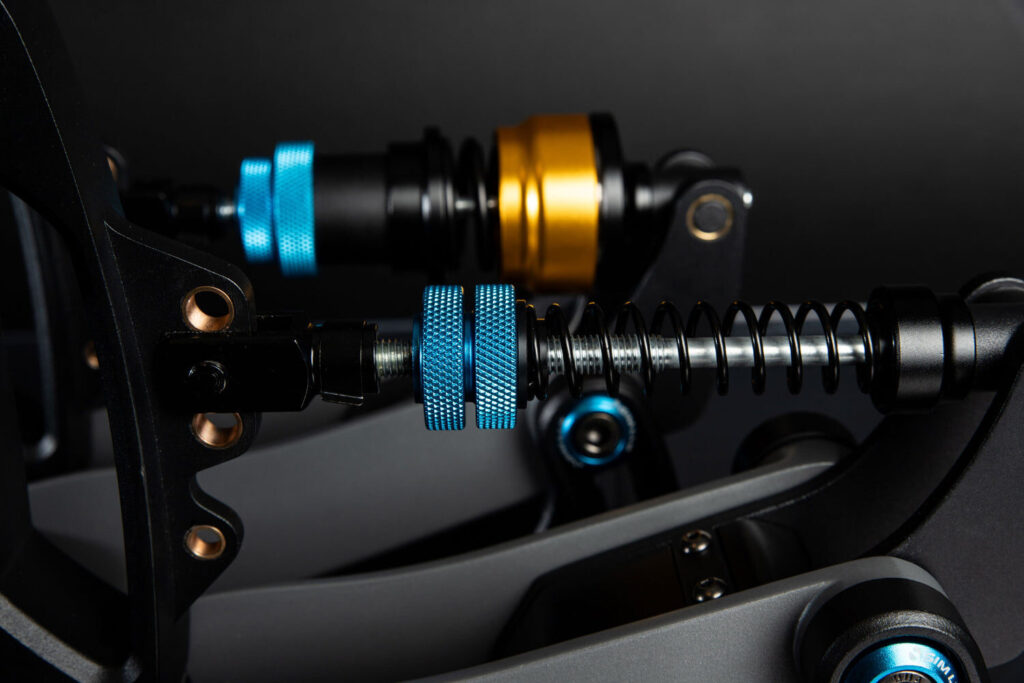
Articulations are clean, axles well adjusted, springs and elastomers well guided. When you handle the pedals by hand, you feel a clean movement, with no disturbing parasitic play. Overall rigidity is superior to that found on entry- or mid-range bent-metal cranksets. It's closer to the kind of assembly you'd associate with serious setups, such as a streamlined aluminum cockpit and muscular direct-drive steering wheel.
What's most surprising is the overall level of finish: no rough edges, no flimsy paintwork. It feels more like a "work tool" than a simple gaming accessory. On the other hand, this very mechanical side may seem a little austere to those who like more visually polished designs, with touches of color or more "racing" shapes. This is pure functionality.
Compared to more affordable loadcell cranksets, the difference is mainly in the rigidity and quality of the moving parts. Compared to some very high-end hydraulic kits, the XP1 is a little less impressive to the eye, but retains a very solid "density/finish" ratio in its category.
Settings, customization and compatibility
The XP1 has been designed so that you can really adapt it to your riding style. Mechanically, you can adjust pedal position, stops, travel and hardness via various springs and elastomer elements. Brake settings range from a fairly progressive feel to something very firm, close to what you'd expect from a racing crankset. The throttle is more finely tuned in terms of hardness and travel, which helps a lot when it comes to dosing out corners. The clutch has a simpler feel, but is more than adequate for modern sim racing.
On the software side, the pedalboard is controlled via a dedicated PC configurator. The interface is generally straightforward: you can adjust the response curve, dead-release point and sensitivity, and save different profiles for different games or cars. There's plenty of scope for fine-tuning brake behavior, whether very linear or with a more aggressive pressure build-up at the end of the stroke. The learning curve is reasonable: you spend a little time at first looking for your settings, but once you've found them, you don't touch much else.
In terms of compatibility, we're talking about PC only in "intelligent" use with software, like most high-end USB pedalboards. On consoles, it's okay if the pedalboard is connected via a compatible base that acts as an interface, but this is clearly not its main playground. The XP1 goes particularly well with a rigid aluminum cockpit, as it has very little tolerance for flexible structures: if the chassis moves, you lose the interest of the powerful loadcell brake.
In terms of ecosystem, it integrates seamlessly with most steering wheels, shifters and cockpits on the market, as long as you have a solid attachment. This is not an "entry-level" product, but rather a crankset you can keep for a long time, and grow with your level. It's clearly a long-term investment, rather than a transitional purchase.
Sensations in play
When braking, the Simlab XP1 immediately makes it clear that it's in a different league from conventional potentiometer cranksets or even some softer loadcells. The stroke is relatively short, but the build-up of effort is very gradual, making it easy to set a target pressure point and stick to it. The sensation of "riding by the kilo of pressure" rather than by pedal position is very pronounced. You know exactly how much you're putting on, and you can repeat it turn after turn.
Stability is excellent under hard braking. You can push hard on the pedal, feel when the tires are about to lock and release just enough to keep the car at the limit of grip. This is exactly where the XP1 changes the experience: the zone between "braking hard" and "locking up" is legible and exploitable. You immediately understand what the car is doing. In trail braking, this progressiveness makes it possible to control the transfer of mass and keep the front end in line without overloading the rear axle.
Grip reading is a real highlight. On cars without ABS, you can clearly feel the difference between a tire that's starting to scream and one that's really stalling. On GTs with aids, the very fine modulation helps to keep you within the ideal performance window, especially on medium corner entries where you're still braking while turning. The crankset doesn't generate vibrations as such, but the consistency of the response means that you can read the reactions by the very slight variation in pressure to be applied.
On the vibrators, the XP1 obviously doesn't provide any dedicated physical feedback, but being able to keep a very stable brake pressure while the car dances on the kerbs gives a lot of confidence. You keep your foot "anchored" on its pressure point and the car remains predictable. On aggressive chicanes or single-seater kerbs, the main benefit is felt when the brakes come back on: you immediately get the same feeling of effort without fumbling.
In long sessions, behavior remains extremely constant. Mechanical rigidity avoids the micro-stroke variations that sometimes occur with more basic cranksets. Fatigue depends above all on the chosen hardness: with a very firm setting, the quadriceps work, but remain in a reasonable zone for intensive sim racing. The pedal doesn't soften or harden, and remains identical from the first to the last lap. A real asset for endurance.
Compared to a softer mid-range loadcell crankset, we clearly gain in precision in critical phases and in perceived stability. You'll find yourself braking later and, above all, more regularly. Compared with even more extreme or high-end hydraulic systems, the XP1 offers a slightly less "organic" feel, but one that's easier to use: clean, legible and efficient, without overcomplexity. On the throttle, the finesse of the metering is a great help in managing the torque of powerful drives. Quick corrections at the end of a bend become more natural: you can ease off the throttle in short bursts, without jerking, thanks to a well-controlled stroke.
Overall, the crankset feels like a precision tool. You quickly feel confident, because the feedback is consistent and immediately understandable. It's not a crankset that shows off, it's a crankset that makes your lap times turn better.
Who's it for? What we like / What we don't like
The Simlab XP1 is clearly aimed at sim racers who are already somewhat involved in the discipline: those who ride regularly, on PC, with a rigid cockpit, and who want to take their braking to the next level. Motivated beginners can get used to it, but they'll only get the most out of the pedals if they're prepared to work on their braking points, cues and riding style. For an intermediate or experienced rider, it's an excellent tool for progress and a perfect addition to a performance-oriented setup.
One of the things I really liked was the consistency of the brake. Once you've found the right setting, you get a pressure point that's very easy to repeat, making clean turns much more frequent. Next, the overall rigidity of the pedal frame immediately puts you at ease: no suspicious flexing, no feeling of fragility, you dare to press hard. Finally, the level of mechanical and software customization offers real freedom. You can adapt the XP1 to a very aggressive style or to a more fluid riding style, without feeling limited by the hardware.
On the other hand, there are a few limitations to bear in mind. The first is that it doesn't forgive a light cockpit: if the structure moves, the experience is severely degraded. It almost requires investment in a serious chassis, which increases the overall cost of a complete setup. Secondly, the very mechanical and industrial feel may put off those looking for a more "finished product" look, with hoods or an elaborate design. It's powerful, but rather crude. Lastly, the predominantly PC orientation, with software management designed with this in mind, limits the interest of a predominantly console gamer who would not benefit from all the finesse of settings.
In terms of perceived value, this is a product positioned as a long-term investment: you pay more than an entry-level loadcell crankset, but you get a base you don't want to change every year. For someone who takes sim racing seriously, the performance/durability ratio remains coherent.
Verdict
The Simlab XP1 is clearly one of those setup elements that transform the way you approach braking. It doesn't add gadgets, it doesn't play on the spectacular side, it concentrates on a precise point: offering a dense, reliable and adjustable loadcell brake, in a rigid structure that holds its course. In an already well-equipped cockpit, this is typically the kind of upgrade that takes a regular rider to the next level of consistency.
On the market, the XP1 is positioned as a performance-oriented premium crankset, above the simple mid-range but without falling into the price or technical exuberance of ultra-high-end hydraulic systems. It's aimed at those who know what they want from a brake, and want equipment that's serious, durable and ready for everyday use.
I clearly recommend it to PC sim racers equipped with a rigid chassis, who often ride demanding simulations and want to lock down the pedalboard issue once and for all. For the occasional gamer, on a light cockpit or mainly console, it won't be the best choice: it's likely to look oversized and under-used. If you're looking to secure your braking, gain in consistency and offer yourself a crankset that follows your progress over the long term, this product can clearly make the difference in your setup.





Reviews