
Asetek Invicta Wheelbase (27Nm) : Test & Review | What it's really worth in 2026
Asetek Invicta Wheelbase (27Nm): My opinion in brief
This base gives a very legible and solid driving feel, with fine feedback that really changes the way you feel the car and the track. It makes sense for PC simracers who are already well equipped (rigid cockpit), who drive regularly and want a durable tool for progress. The investment remains coherent if simracing is a real priority.
When you buy through our links, we may earn an affiliate commission.
Asetek Invicta Wheelbase 27 Nm: test & full review
In the high-end Direct Drive base segment, the Asetek Invicta 27 Nm is clearly positioned as a premium product, designed for demanding simracers who want torque, precision and a coherent ecosystem. We're not talking about a "discovery" base, but an ambitious control tool, capable of replacing an advanced installation in the long term.
On paper, it promises ultra-detailed force feedback, quasi-industrial construction and extensive integration into the Asetek ecosystem (flywheels, pedals, software). What attracts is the mix of raw power (27 Nm, that's massive) and the promise of finesse in the micro-details. The idea is to offer a tool capable of keeping pace with a progressing rider, without becoming the limit of his level.
For my part, I approached this base with three criteria in mind: the quality of the feedback, consistency over long sessions and the ease of really exploiting the power available. A base that pulls on the arms is useless if you can't read the grip, load transfer and loss of adhesion better. This is where the Invicta has to prove that it's more than just a torque monster.
Quality design, manufacture and printing
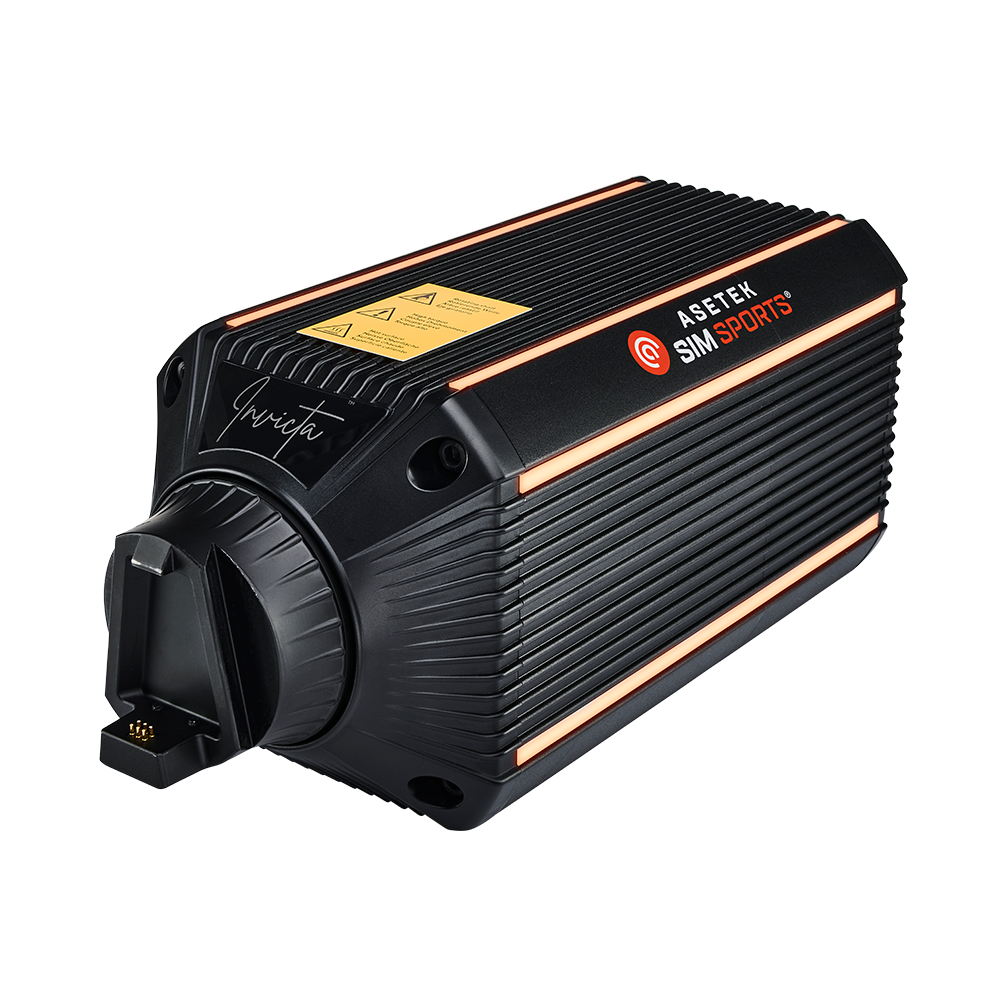
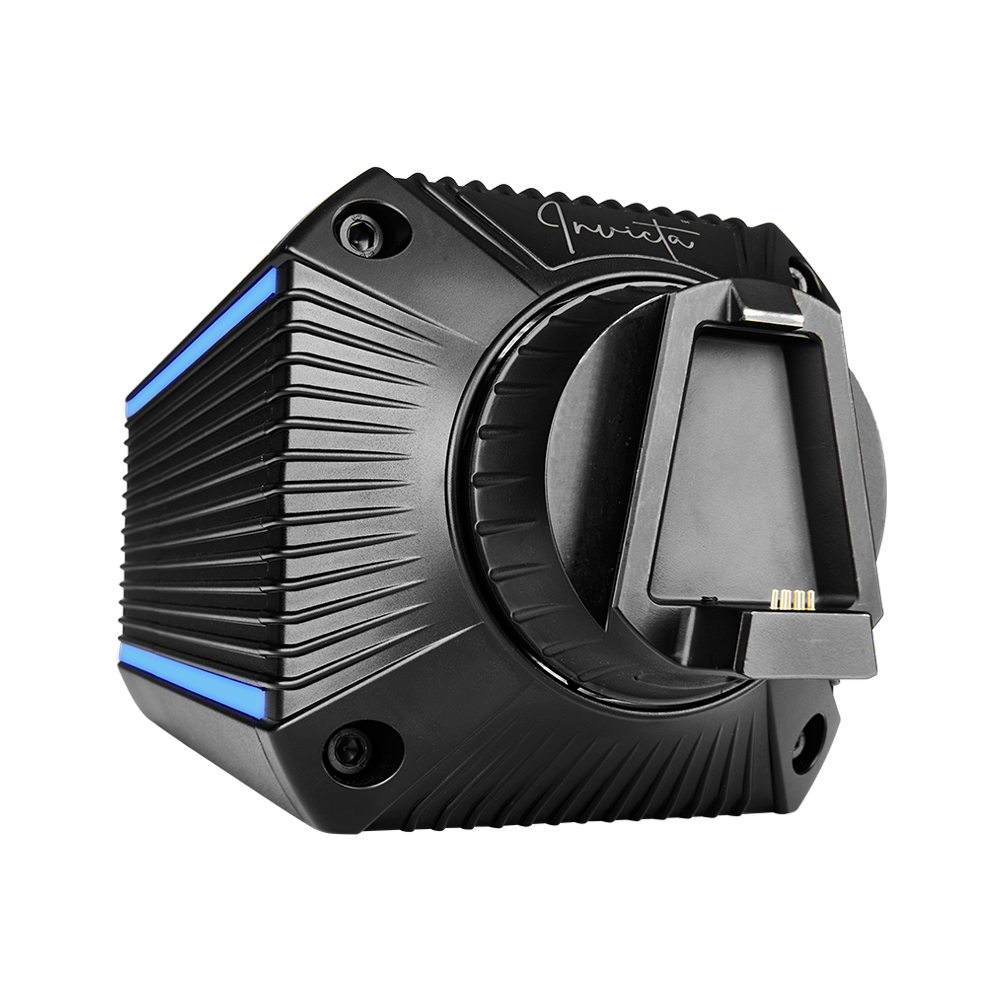
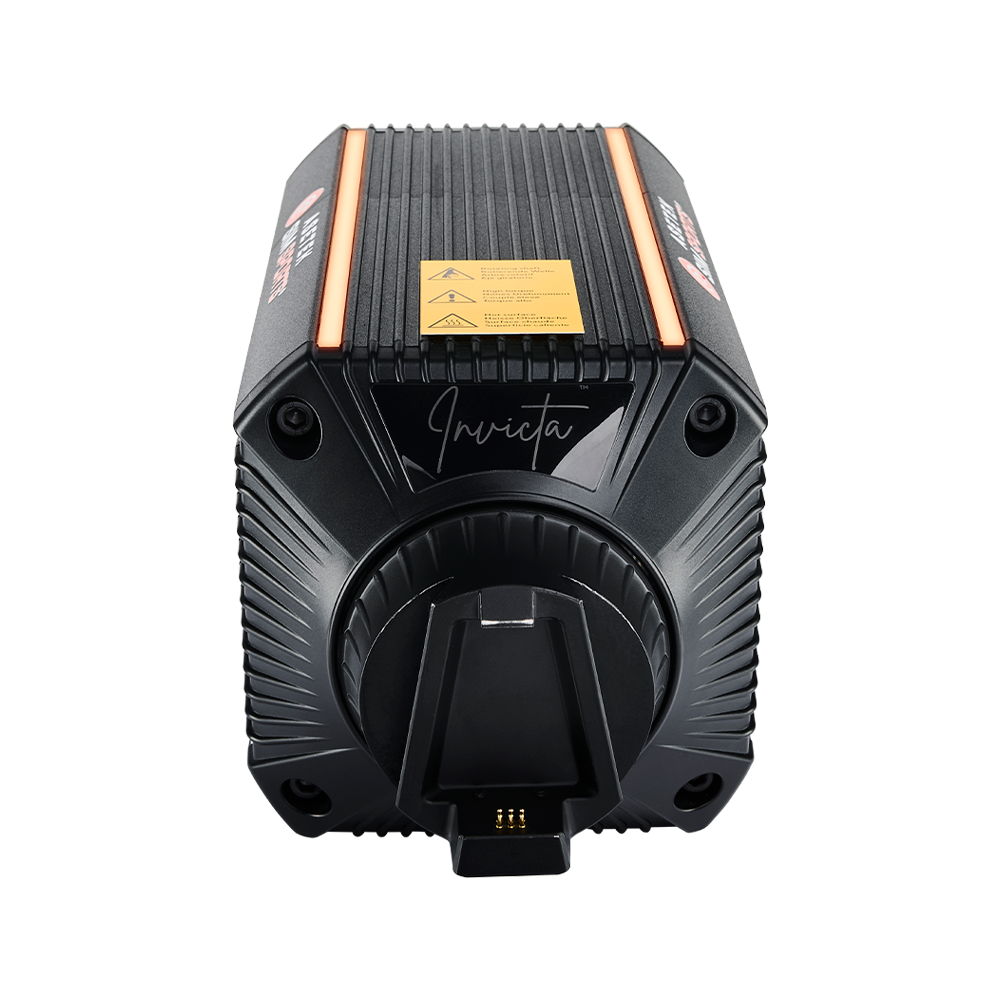
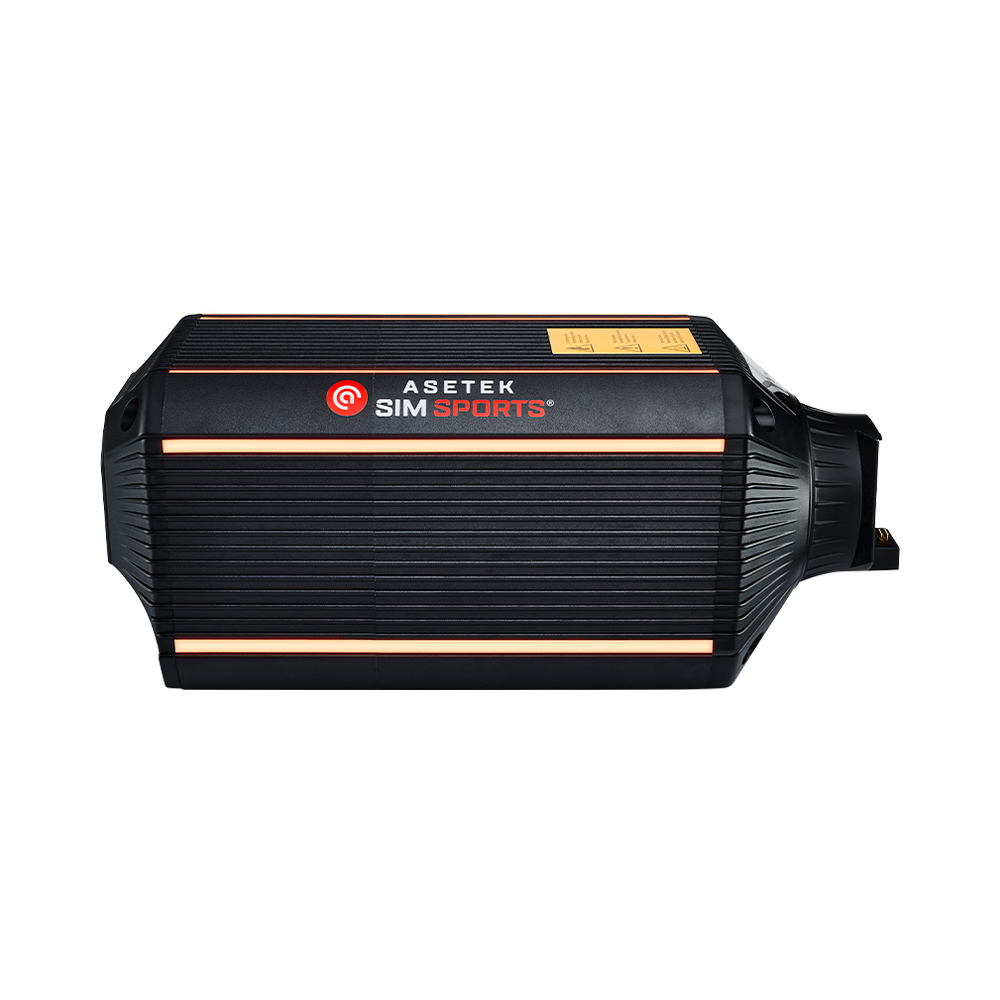
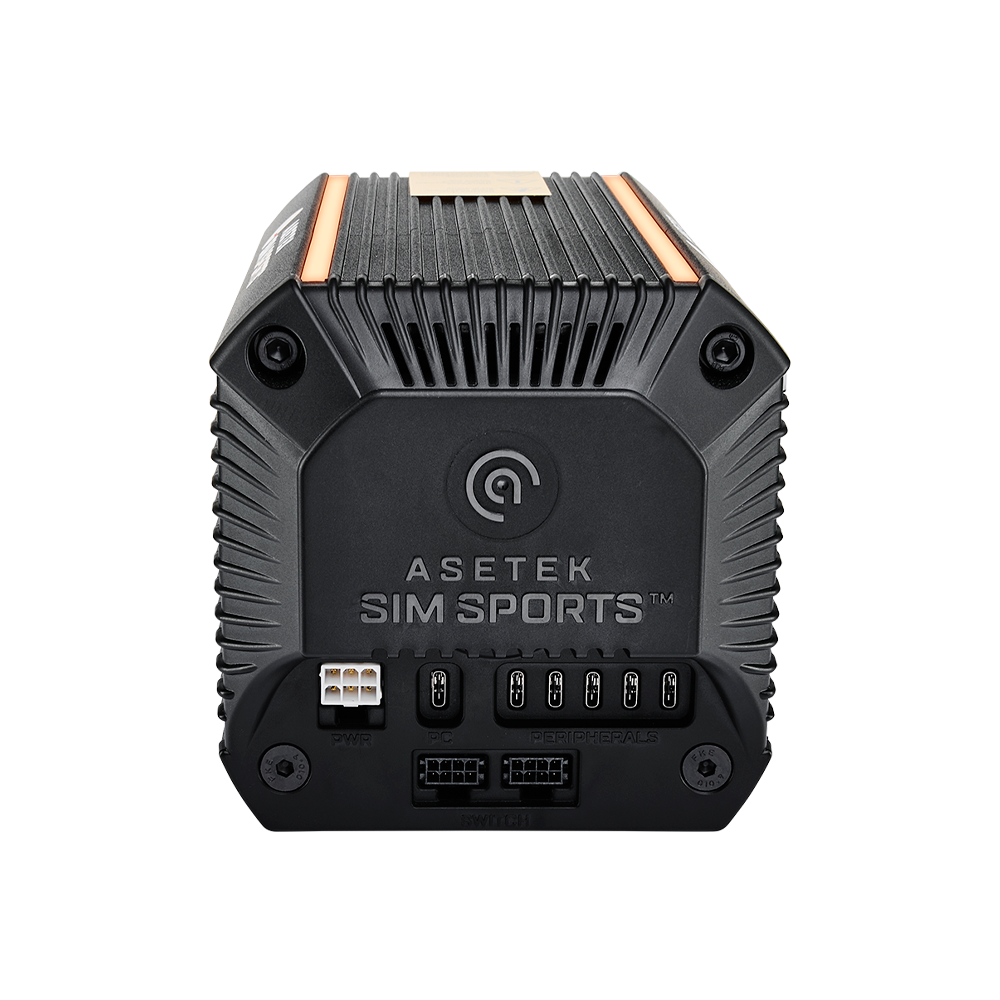
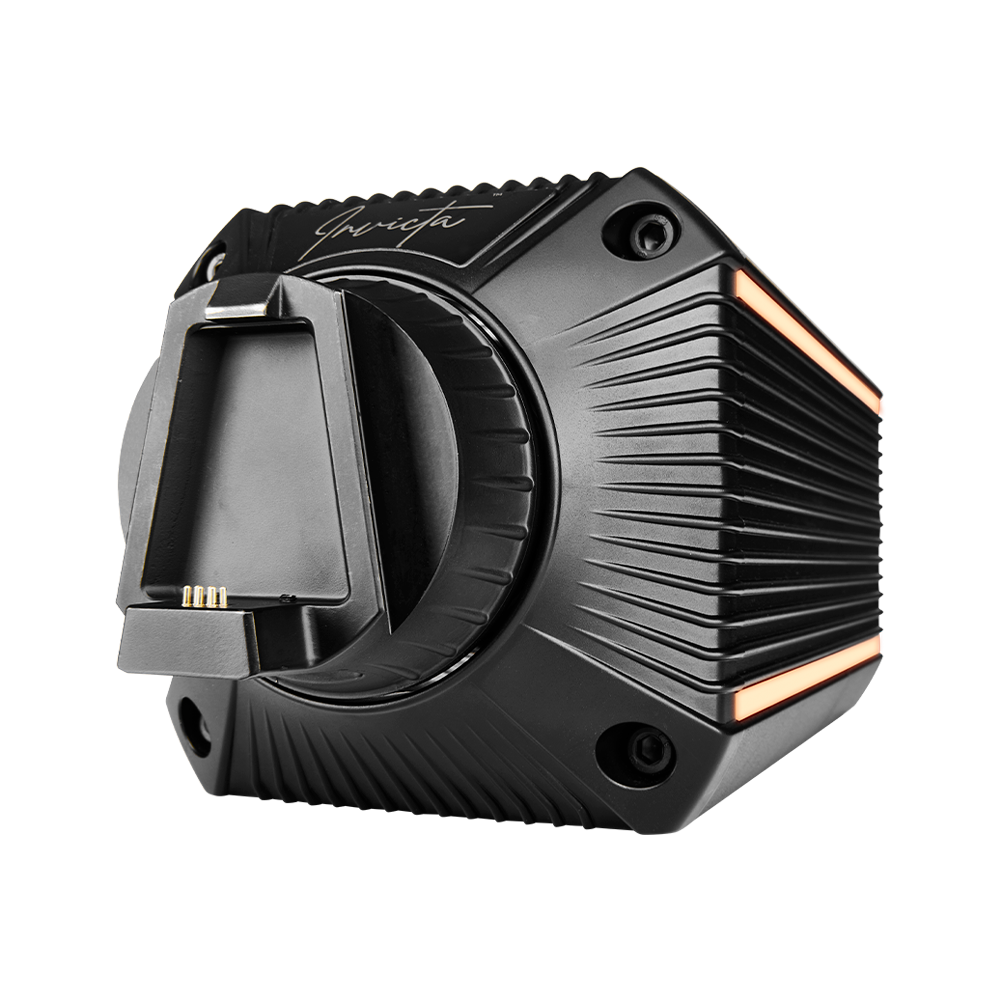
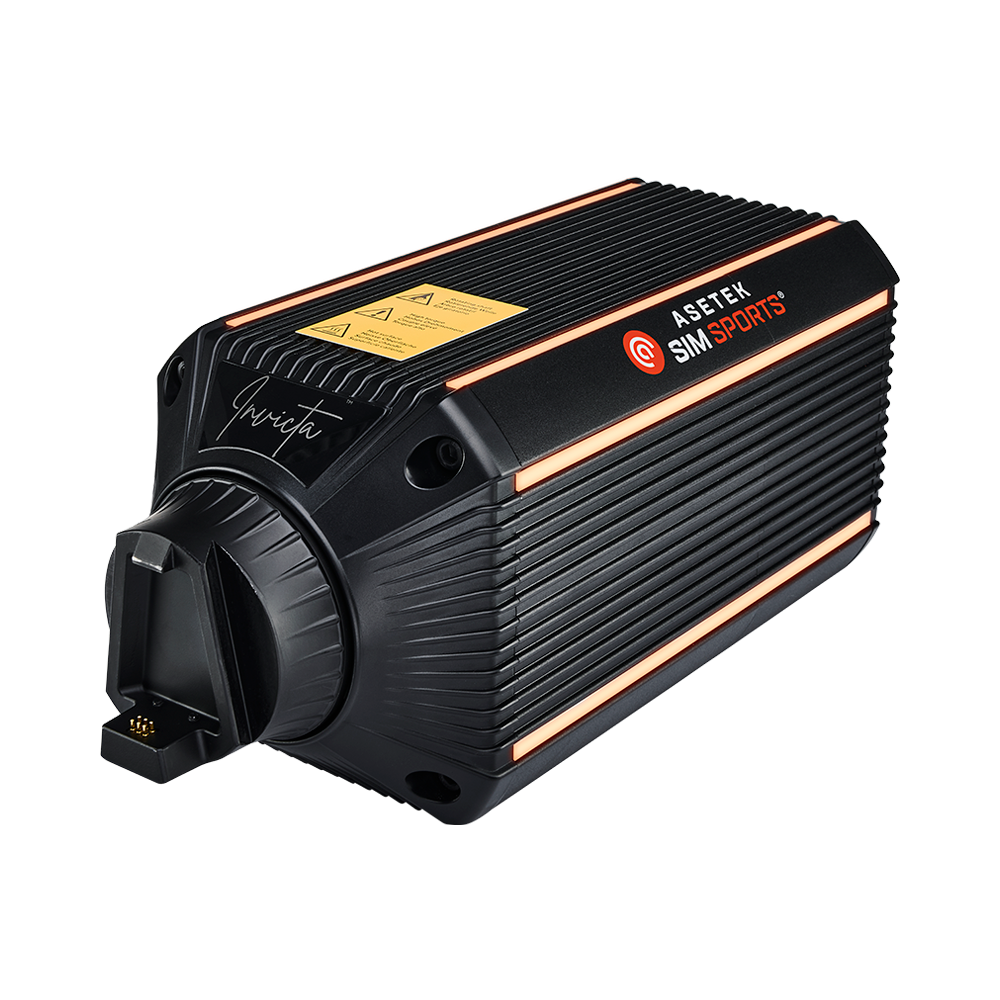
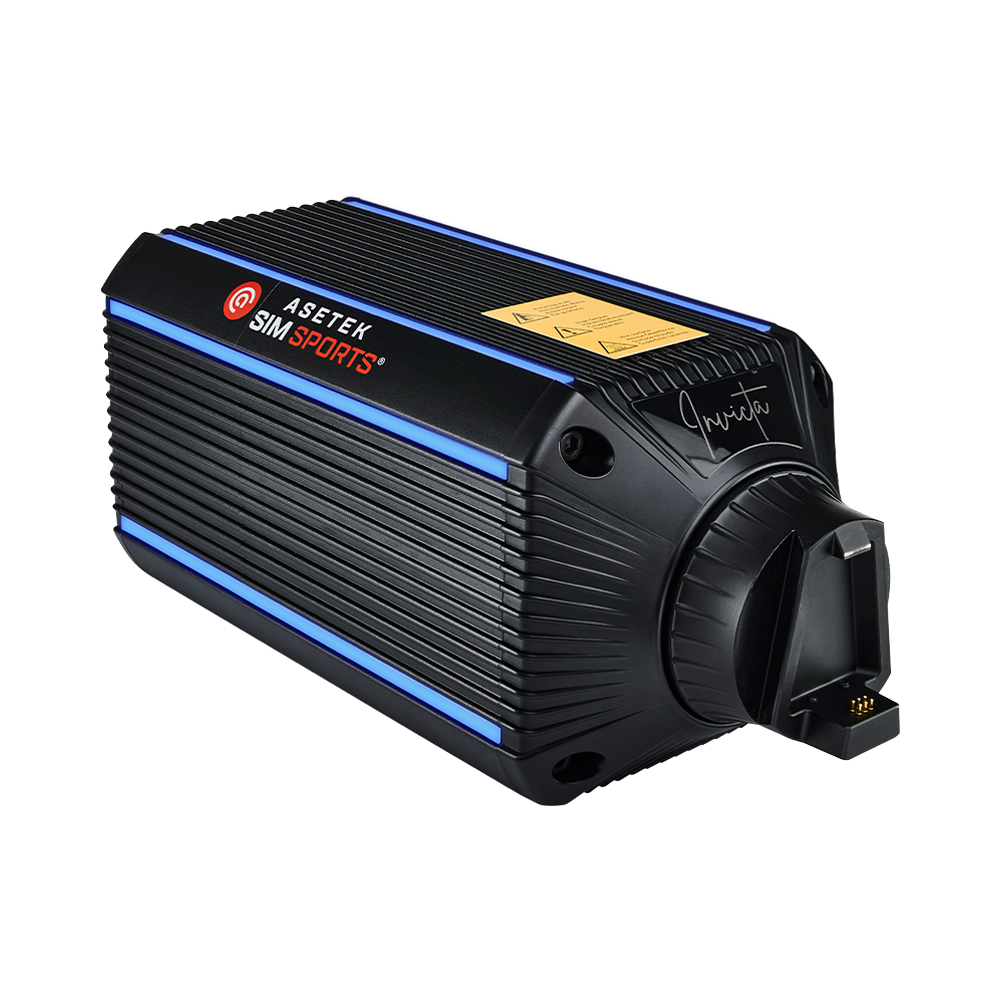
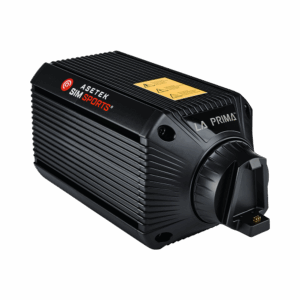
Visually, the Invicta Wheelbase immediately gives the impression of a serious product. The machined metal chassis inspires confidence, with a finish that exudes premium quality: clean surfaces, sharp edges, nothing moves when you handle the base. It feels like a dense, heavy block, designed to stay screwed to a sturdy cockpit.
Perceived rigidity is excellent. Once mounted on a suitable support, there's no parasitic flexing, even when using high forces. This is a key point with this type of torque: if the structure deforms, we lose the finesse that the base can offer. Here, every rotation and jolt remains contained within the base, with no parasitic vibration of the chassis itself.
In hand, via the steering wheel, you feel this solidity: the engine seems perfectly contained in its housing, with no play and no suspicious mechanical noises. Quick changes of direction are clean and straightforward, with a "single block" feel between the base and the steering wheel. It feels like a product built to withstand years of heavy use.
What's immediately surprising is the relative compactness of the engine in relation to its power output. For a base model of this torque level, the volume remains reasonable, with no superfluous fairings. You can feel that the mechanical optimization has been worked on.
On the more mixed side, this is clearly a product designed for a rigid, dedicated cockpit. On a desk or light stand, it's neither comfortable nor logical. Compared with more mainstream, mid-range bases, the design is less "plug & play", more industrial, less salon-oriented. Compared to other premium Direct Drives, the level of finish is at the same level, or even a little higher in terms of perceived rigidity, but without making any major aesthetic breakthroughs. It's very clean, very professional, but not visually spectacular.
Settings, customization and compatibility
On the software side, the Invicta relies on the Asetek ecosystem: dedicated software lets you manage profiles, power, FFB response and the little adjustments that make all the difference at the wheel. The interface is easy to read, with relevant presets as a basis for your work. You're not drowned in dozens of obscure cursors, which is appreciated.
The really useful settings are there: maximum force, filtering, friction, damping, inertia, and a few advanced parameters to adapt the response to the type of car or game. The logic is clear: start with a predefined profile, then refine according to how you feel. There's a learning curve, especially if you've never touched an advanced Direct Drive base, but you won't feel lost. With a little time, you'll arrive at a very coherent result.
Compatibility is naturally PC-oriented, with the main simracing titles supported. For consoles, the base is not designed as a universal consumer product. It should clearly be considered as a PC-first base, for a dedicated simracing environment. This is a point to bear in mind if you play mainly on consoles.
The Asetek ecosystem really comes into its own here: Asetek wheels, cranksets and accessories connect quite seamlessly, which simplifies setup if you stay in the same family. The QRs (quick-release systems) are designed to be solid and repeatable, with no perceptible play. Integration into a rigid cockpit is straightforward, with standard mounting points.
In terms of scalability, this is clearly not an entry point. It's already a destination base, a long-term investment. It can easily support heavier flywheels, high-end pedalboards and future upgrades to the rest of the setup. You can upgrade everything around it without the base becoming the weak link.
Sensations in play: where it all comes down to it
The first thing that strikes you on the track is the precision of the force feedback. Every variation in load on the tires, every small transfer of mass, is reflected in the steering wheel with marked clarity. It's easy to understand what the car is doing, especially in the critical phases of corner entry, mid-stress and torque output.
Grip reading is one of the Invicta's strong points. When grip begins to deteriorate, you can feel it coming before the car really starts. The steering wheel becomes lighter and more responsive, with small oscillations that signal the limit. This finesse allows you to drive closer to the breaking point, while still feeling in control. In demanding simulations, this is a real plus for consistency.
In fast corners, the high torque also provides great stability. You can maintain steering against a heavy load without feeling like you're being subjected to it. Even with high forces, the base remains fluid, with no parasitic jerks. You can feel the tire loading, twisting, then eventually stalling. Variations aren't just strong, they're legible.
On vibrators, the Invicta is very expressive. You can feel both the texture and the structure of the vibrator: the small striations, the large detachments, the compressions in support. If you push the settings, it can become quite physical, but with the right amount of filtering, you keep the detail without falling into gratuitous brutality. You get the sensation of really riding on something, not just receiving a generic vibration.
Quick corrections are another area where torque makes the difference. In the event of a sudden oversteer or loss of rear end, the base reacts instantly. The steering wheel returns quickly, but in a controllable manner. You can follow the movement without it going off in all directions. Perceived latency is very low, which gives a lot of confidence to straighten out the car at the limit.
On long sessions, consistency is the key. There's no perceptible warm-up that would alter the sensations, and no drop in torque over time. The feedback remains the same, which is highly appreciable when you're trying to work out your bearings or prepare for a long race. You simply need to adapt the overall force to avoid fatigue, because at 27 Nm, if you leave everything at full throttle, it's clearly physical. Fortunately, the base remains very usable at much lower torque levels, while retaining its precision.
Compared to a less powerful base, we gain in two areas: available torque margin and handling of heavy loads. On heavy GTs or highly loaded prototypes, the difference is clear: the flywheel doesn't saturate, even under the heaviest loads. Dynamics and nuances are retained, whereas a more modest base can become a little flat when it reaches its limit. On the other hand, compared with an even more powerful base, you don't feel restricted. 27 Nm, for serious simracing, already gives you plenty to work with. The performance ceiling has more to do with the rider than the base.
Overall immersion is very high. You feel mechanically connected to the virtual car. Reactions, even at low speeds, remain coherent and nuanced. It's not just a big engine pulling in all directions, it's a tool for reading the track. This is where the base really changes the experience.
Who is it for? Strengths and weaknesses
The Invicta 27 Nm is clearly aimed at an already committed simracer profile: PC user, rigid cockpit, and desire to push settings a little further than the "plug & play" mode. A highly-motivated beginner may find it to his or her liking, but let's be honest: it's a base model that makes perfect sense in the hands of an intermediate to experienced player, who rides regularly and wants a serious tool to help him or her progress.
What I particularly appreciated was the quality of the feedback. You get the feeling that the available torque isn't there just to impress, but to offer a real understanding of the car's behavior. Secondly, the feeling of mechanical rigidity and overall solidity is reassuring: you're not afraid to drive hard, to set the car high, the base can take it. Last but not least, integration into the Asetek ecosystem makes it easy to use if you accumulate several of the brand's elements: hardware + software consistency, cleaner wiring, and well-thought-out profiles.
As for limitations, the first obvious point is positioning: we're talking about a major investment, clearly above a mid-range base. This level of financial commitment has to make sense for your use. Secondly, the very PC and rigid cockpit orientation reduces its interest for a console gamer or someone looking for a flexible desktop installation. Thirdly, raw power can become counter-productive if you don't take the time to adjust the base to your physical and technical level. Poorly exploited, it tires more than it helps.
In terms of perceived value, we're not talking about an aggressive "performance/price" ratio like some more affordable bases. Here, you pay for power, finish and premium positioning. For a simracer who wants a durable, top-of-the-range setup, it's defensible. For the casual gamer, it's clearly overkill.
Verdict: what is the Asetek Invicta 27 Nm really worth?
The Invicta Wheelbase 27 Nm transforms a simracing setup into a serious driving platform. It provides ample torque reserves for all types of car, precise force feedback and a consistency that allows long driving without unpleasant surprises. In a rigid cockpit, it becomes the heart of a performance-oriented package.
On the market, it is positioned in the premium segment, up against other high-powered Direct Drives. Neither an entry-level product, nor a simple "mid-range plus", but a base designed as a tool for work and pleasure for demanding enthusiasts.
I'd recommend it to those who ride mainly on PC, who have a solid cockpit, and who want a long-term investment, capable of accompanying a level rise without becoming the limit. On the other hand, if you play mainly on occasion, on console or desktop, or if you don't like to spend a bit of time on settings, a simpler, less powerful base will probably be more suitable.
If you're looking for an ultra-strong, ultra-powerful Direct Drive base with a fine feel, this product can clearly make the difference in your setup.




Reviews